
Care Versus Control
Blow OutThis flow deepens the novel’s theme that protection can become control, while genuine care requires attention to another person’s agency.
increasing Bearing strength in each event
 decreasing
Bearing strength in each eventdecreasingDistance as Self-Protection
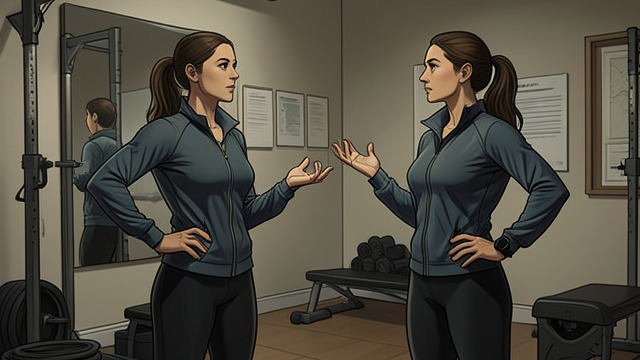
Distance as Self-Protection
A physical lesson
Joanne trains in Krav Maga and repeats the mantra of managing distance to manage damage. The principle applies to physical danger, but she also recognises its relevance to emotional wellbeing.
Her recent breakup with Abbie makes the lesson personal. She tries to maintain enough distance from pain to keep functioning without pretending it has disappeared.
A changing boundary
The investigation requires closeness to victims, colleagues, and suspects. Joanne must decide when distance protects judgment and when it becomes avoidance.
The principle evolves from a training phrase into a way of understanding her work and relationships.
Tracking a Daughter

Tracking a Daughter
Protection through technology
Ryan tracks Melissa’s phone and expects her to follow a school travel routine. His concern is real, but his daughter experiences the surveillance as something she must sometimes evade.
Melissa chooses a route through the park without telling him. The decision is normal teenage independence, yet it leaves her outside the protection her father thinks he has arranged.
Control cannot guarantee safety
The tracker gives Ryan a last location but cannot stop the abduction or identify the captors. The technology creates information, not command over events.
The story asks whether protection can remain care when it leaves no room for a young person’s autonomy.
A Captive’s Agency

A Captive’s Agency
Small choices under coercion
Melissa is tied, hooded, and controlled, but she continues to observe sounds, remember details, and attempt to tell her captors about her asthma. These acts are limited forms of agency in a situation designed to deny it.
Her captors provide an inhaler, yet also intimidate and humiliate her. Their occasional care does not make the captivity benevolent.
Survival is not consent
Melissa’s compliance with rules is a strategy to stay alive, not acceptance of her confinement. When the opportunity comes, she resists and bites Darren’s hand.
The distinction matters: a person’s adaptation to danger should not be mistaken for willing participation.
Joanne’s Protection of Others

Joanne’s Protection of Others
Warning those at risk
Joanne issues warnings to possible targets, contacts Sarah Weston, and tries to secure a ricin vaccine. Her responsibility reaches beyond the immediate crime scene to people who may never realise they are in danger.
Sarah challenges Joanne for treating protection as something only others need. Joanne has not considered herself a target despite her name appearing in the notebook.
Care includes self-awareness
At Trafford Centre, Joanne leaves the control room because she believes direct presence can help protect the hostage. That choice demonstrates commitment but also exposes her to danger.
The story recognises the tension between service and self-neglect: caring for others does not make the investigator invulnerable.
Agata’s Risk and Care

Agata’s Risk and Care
A rescuer crosses a boundary
Agata follows the coordinates into a dark forest despite Max’s request that she wait. She finds Melissa, accepting a risk that police would not have permitted her to take.
Her choice is an act of care, but not a simple model of good judgment. It could have endangered both Agata and the child.
Care after danger
Jo is grateful and frightened by Agata’s actions. At home the next evening, the two women share food, affection, and plans without pretending the earlier conflict never happened.
Their relationship shows care as attention and mutual vulnerability, not the power to guarantee safety.
Monday morning, October 16
Tuesday, October 17
October 17–22
Thursday through Sunday, October 19–22
Sunday evening, October 22
